Knowing When Trenchless Rehabilitation Is and Is Not the Right Solution
CIPP lining has changed the way contractors approach damaged sewer and drain lines.
Instead of excavating an entire pipeline, contractors can often rehabilitate the existing pipe without excavation reducing or eliminating disruption to landscaping, concrete, flooring, driveways, and other surrounding areas.
But trenchless does not mean excavation disappears completely.
There are pipe conditions where lining or patching may not be the best solution. In some situations, a section of pipe needs to be exposed, corrected, or replaced before rehabilitation can continue.
The key is knowing the difference.
A thorough sewer camera inspection, proper pipe preparation, and an understanding of the host pipe’s condition can help contractors determine when to line, when to patch, and when excavation is the better option.
Start With a Sewer Camera Inspection
Before deciding how to repair a pipe, you need to understand what is actually happening underground.
Using a sewer inspection camera allows contractors to evaluate the host pipe and identify defects that could affect the repair. Depending on the application, a pipe inspection camera may reveal:
- Cracks and fractures
- Root intrusion
- Corrosion and scale
- Offset or separated joints
- Standing water (due to bad pitch or bellies in the pipe)
- Missing pipe material
- Localized breaks
- Collapsed sections
- Other structural deterioration
Not every defect requires the same repair.
Some localized problems may be candidates for a trenchless point repair. More widespread deterioration may make full-length CIPP lining a better option. Other conditions may prevent either method from repairing the pipe completely.
This is why camera inspections are such an important part of the process. The goal should never be to line a pipe simply because lining equipment is available.
The goal is to recommend the repair that makes the most sense for the condition of the pipe.
When the Pipe Has Collapsed
One of the clearest situations where excavation may be necessary is a severely collapsed pipe.
During a sewer camera inspection, a collapsed section may appear as displaced pipe material, exposed soil, a significantly reduced opening, or a complete obstruction that prevents the inspection camera from moving farther through the line.
CIPP lining rehabilitates an existing pipeline from the inside. If the original pipe has lost too much of its shape or there is no longer a usable pathway through the damaged section, the area may need to be excavated and repaired before lining can take place.
Signs of a serious collapse may include:
- Complete loss of the pipe opening
- Displaced or broken pipe material
- Significant sections of exposed surrounding soil
- A camera that cannot pass the damaged area
- Significant loss of the original pipe shape
In these situations, locating the exact problem becomes especially important.
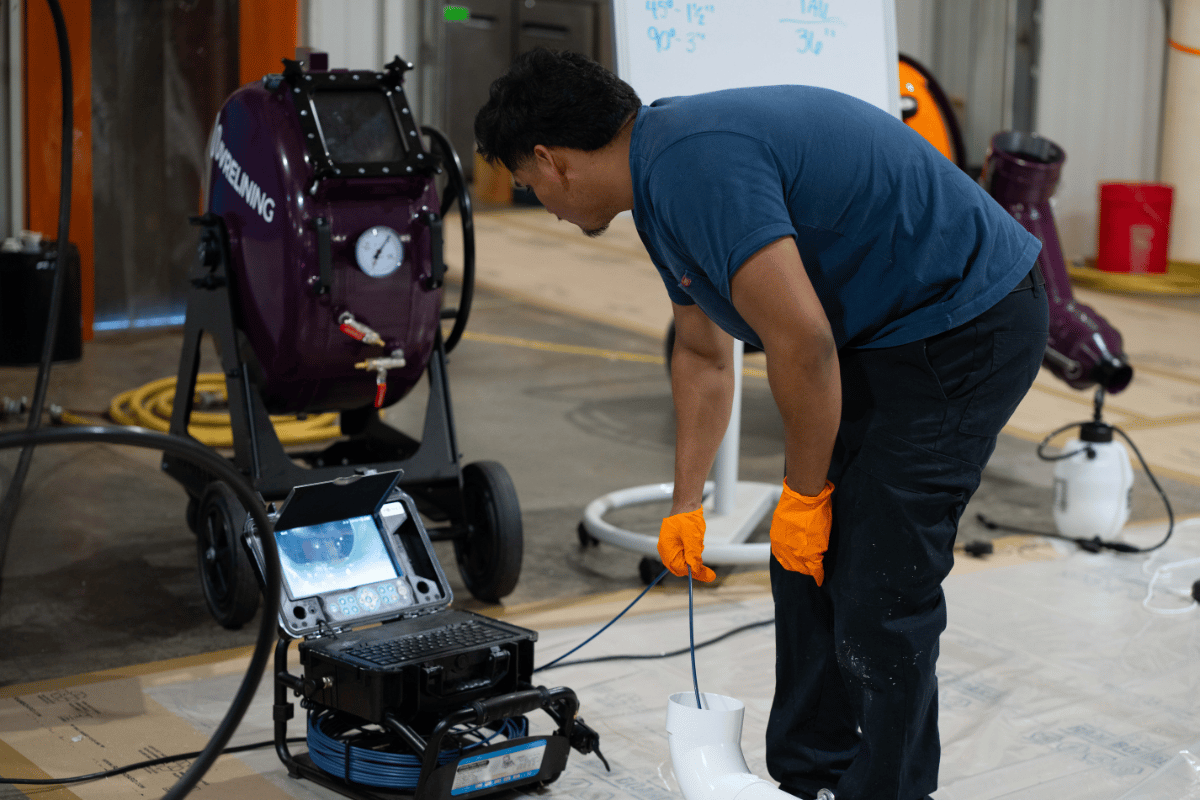
A Quick Sight Camera includes a built-in 512Hz sonde and distance counter to help contractors identify the location of a defect using compatible locating equipment. This can help pinpoint the problem before excavation begins.
When Sections of Pipe Are Missing
A pipe does not always fail by simply cracking.
Older or severely deteriorated systems may have areas where portions of the original pipe wall are missing altogether. Footage from a pipe video inspection camera may reveal exposed soil, voids, jagged edges, or sections where the original pipe material is difficult to identify.
At that point, the contractor needs to determine whether there is enough remaining host pipe to support trenchless rehabilitation using a calibration tube or pre-liner to replace the missing pipe, or if excavation is a wiser alternative..
Missing pipe sections may indicate:
- Advanced structural failure
- Severe deterioration
- Soil entering the pipeline
- Voids surrounding the pipe
- Loss of the original pipe structure
Excavation may be necessary when a pipe is offset by more than 30%, has a belly deep enough that you can’t see above the water, is back-pitched, or has an issue that lining simply won’t correct. Lining is a great solution for problems such as tree root intrusion, cracks, and holes, as well as restoring aging pipes that still have proper pitch and flow. It can also be used as a preventative measure to strengthen existing pipes and help reduce the risk of future problems.
When an Offset Is Too Severe
Not every offset joint requires excavation.
Small offsets and misaligned joints may still have trenchless repair options depending on the condition of the pipe and the application. APS Versa-Patch is designed for targeted repairs and challenging pipe conditions, including offsets, bends, transitions, fractures, and localized failures.
The severity of the offset is what matters.
If two sections of pipe have shifted far enough that the opening is significantly restricted, equipment cannot pass, or the original pathway of the pipe has been compromised, excavation may be the better solution.
A severe offset may cause:
- Significant flow restriction
- Recurring debris accumulation
- Difficulty navigating inspection or rehabilitation equipment
- Problems installing a liner through the affected section
Contractors should evaluate how far the pipe has moved rather than assuming every offset can or cannot be rehabilitated.
When the Pipe Has a Significant Belly or Slope Problem
Standing water during a drain inspection camera survey can indicate a low spot in the pipeline, commonly referred to as a belly.
A liner follows the pathway of the existing host pipe. Because of that, lining a pipe does not automatically correct the underlying grade or soil conditions that caused a significant low spot.
If a section of pipe has settled enough to create a major drainage or slope issue, excavation may be necessary to correct the physical position of the pipe.
Standing water may indicate:
- A low section of pipeline
- Improper slope
- Soil settlement beneath the pipe
- An area where waste and debris can collect
- Increased potential for recurring blockages
The length and severity of the affected area should be evaluated before making a repair recommendation.
Some standing water does not automatically mean excavation is required. The important thing is understanding why the water is there and whether the existing pipe geometry can still support a successful trenchless rehabilitation.
When You Cannot Properly Prepare the Pipe
Successful trenchless rehabilitation begins before the liner, resin, or patch ever enters the pipe.
The host pipe needs to be inspected and properly prepared so the contractor understands the condition of the surface underneath roots, scale, grease, debris, and other buildup.
Heavy scale, roots, concrete, failed lining material, and other obstructions can sometimes be removed using professional pipe cleaning and milling equipment.
After cleaning, another sewer camera inspection should be performed.
That second inspection may reveal:
- Cracks that were hidden by scale
- Damaged or separated joints
- Missing pipe material
- Corrosion
- Structural deterioration
- A larger problem than the initial inspection showed
If the obstruction cannot be removed or the pipe cannot be adequately prepared for the selected rehabilitation method, forcing a liner into the situation is not the answer.
Additional repair work or excavation may be necessary first.
When Excavation Is Only Needed in One Area
Choosing excavation does not always mean digging up the entire pipeline.
One of the advantages of performing a thorough plumbing inspection camera survey and locating a defect is the ability to identify the specific section causing the problem.
A contractor may determine that one severely damaged area needs to be excavated and replaced while the remaining pipeline can still be rehabilitated using CIPP.
For example, a project could involve:
- Locating a collapsed or severely offset section
- Excavating and repairing that specific area
- Cleaning and preparing the remaining host pipe
- Performing another camera inspection
- Lining or patching the sections that are appropriate for trenchless rehabilitation
The repair does not have to be all excavation or all trenchless.
Sometimes the best solution uses both.
When a Point Repair Makes More Sense Than Excavation
Before excavating a localized defect, contractors should also determine whether a point repair is possible.
APS Versa-Patch is designed for targeted trenchless repairs and can address conditions such as cracks, leaks, fractures, moderate offsets, infiltration points, localized breaks, damaged pipe walls, and other isolated failures.
Instead of rehabilitating an entire run or excavating a localized defect, a point repair reinforces the specific section that needs attention.
This can make sense when:
- The majority of the pipe is still functional
- Damage is concentrated in one location
- The damaged section remains accessible
- The pipe retains enough structure for the repair
- The damaged pipe can be cleaned properly
The condition of the host pipe should ultimately determine whether patching, lining, excavation, or a combination of methods makes the most sense.
Do Not Make the Decision From the First Camera Pass
Finding one issue does not mean the inspection is complete. A root mass may hide a separated joint. A heavy scale may cover a crack. Standing water may hide damage.
An obstruction may prevent sewer inspection cameras from reaching additional damage farther down the line.
Always be sure to clean the pipe and inspect it again before developing the final repair plan.
Before-and-after footage can help contractors:
- Identify the true condition of the host pipe
- Locate individual defects
- Determine the length of damaged sections
- Decide whether the pipe can be prepared for lining
- Document why excavation may be necessary
- Explain the recommended repair to the customer
This is also why choosing a good inspection camera for the application matters. APS Quick Sight Cameras are designed to help contractors inspect, locate, and document pipe conditions before and after trenchless work.
A good repair recommendation starts with a good inspection.
Explain When Excavation Is Necessary
Customers interested in trenchless rehabilitation are often interested for a simple reason: they do not want their property dug up.
If excavation becomes necessary, showing the customer why can make the conversation much easier.
Instead of simply telling the customer, “We have to dig this section up,” use the camera footage to show them exactly what is happening inside the pipe. Point out the collapse, severe offset, missing section of pipe, standing water, or loss of pipe shape, and explain why those conditions may require excavation. From there, show them what portions of the repair can still be completed using trenchless methods. The goal isn’t to sell excavation or lining, it’s to clearly explain the condition of the pipe and help the customer understand the right repair for the situation.
The APS Approach
At American Pipelining Solutions, we believe trenchless technology gives contractors powerful options for rehabilitating damaged pipelines with less disruption and more efficient workflows.
But knowing how to use trenchless equipment is only part of the job.
Knowing when to use it matters just as much.
A successful project begins with a sewer camera inspection, understanding the defect, properly preparing the host pipe, and choosing the repair method that fits the application.
That may mean a targeted repair with Versa-Patch.
It may mean full-length CIPP lining.
It may mean excavating one problem area before continuing with trenchless rehabilitation.
And in some situations, excavation may simply be the correct repair.
APS supports contractors with Quick Sight Cameras, Quick Sight Camera parts, pipe preparation equipment, Versa-Patch and Versa-Light point repair systems, CIPP lining equipment, resin and liner solutions, hands-on APSTA training, repair services, and knowledgeable technical support to help crews approach each job with confidence.
Because the best trenchless contractor is not the one who tries to line every pipe.
It is the one who knows when to line, when to patch, and when to dig.