What Your Camera Is Telling You
Running an inspection camera through a sewer or drain line is only the first step.
The real value comes from understanding what appears on the screen and knowing what those findings could mean for the pipe.
During a sewer camera inspection, contractors may discover anything from a simple obstruction to significant structural damage. Some findings may only require cleaning or continued monitoring. Others may indicate that the pipe needs a localized repair, full rehabilitation, or additional evaluation.
Knowing how to identify and explain these common findings helps contractors make more informed recommendations and gives customers greater confidence in the proposed solution.
Here are some of the most common conditions you may encounter during a plumbing camera inspection and what they could mean.
Root Intrusion
Roots are one of the most recognizable findings during a sewer camera inspection.
They may appear as thin strands entering through a joint or as a thick mass filling a large portion of the pipe. Roots naturally grow toward moisture and can enter through small cracks, separated joints, or other openings in the pipeline.
Small amounts of root intrusion may initially cause limited disruption. As the roots continue to grow, however, they can collect waste and debris, restrict flow, and contribute to recurring backups.
Root intrusion may indicate:
- An opening in the pipe
- A damaged or separated joint
- A crack allowing roots to enter
- A developing or existing blockage
- The potential for recurring problems
Removing the roots may restore flow, but it does not necessarily correct the opening that allowed them to enter. The pipe should be inspected again after cleaning so the contractor can better evaluate the underlying condition.
Grease and Debris Buildup
Not every blockage is caused by a broken pipe.
Grease, soap residue, waste, wipes, and other materials can gradually collect inside a sewer or drain line. During a drain inspection camera survey, this buildup may appear as a coating along the pipe wall or as a larger obstruction reducing the available opening.
Heavy buildup can make it difficult to properly evaluate the pipe because the camera may only show the material covering the surface.
Grease and debris buildup may indicate:
- Reduced flow through the pipe
- A developing blockage
- Improper materials being placed down the drain
- A need for professional cleaning
- A possible low spot where material is collecting
Cleaning the line can remove the immediate restriction and provide a clearer view of the pipe underneath. A follow-up inspection can then help determine whether there are cracks, roots, corrosion, or other defects hidden beneath the buildup.
Cracks and Fractures
Cracks can appear in several different ways during the video inspection camera survey of the pipe.
Some may look like a thin line along the pipe wall. Others may extend around the circumference of the pipe or appear alongside missing or displaced material.
The appearance of a crack does not always reveal its full severity. Contractors should consider its location, length, width, and whether there are additional signs of movement or deterioration nearby.
Cracks and fractures may indicate:
- Aging pipe material
- Ground movement
- External pressure on the pipe
- Structural deterioration
- A potential path for roots or groundwater
A small crack may require additional monitoring, while more extensive cracking could indicate the need for repair or rehabilitation.
The important thing is to clearly document what was found and avoid making assumptions based on one image alone.
Offset or Separated Joints
Sewer systems are constructed from multiple sections of pipe connected by joints.
Over time, soil movement, settling, poor installation, or external pressure can cause those sections to shift. During a camera inspection plumbing service, the technician may see one section of pipe sitting higher, lower, or slightly to the side of the next section.
This is commonly described as an offset joint.
An offset or separated joint may indicate:
- Movement in the surrounding soil
- Improper alignment
- An opening where roots can enter
- A point where waste and debris may collect
- A restriction that makes camera navigation difficult
The severity depends on how far the sections have moved and whether the offset is affecting flow.
A minor offset may remain somewhat functional, while a larger displacement could create a significant obstruction or make certain rehabilitation methods more difficult.
Standing Water
A properly sloped pipe should allow water to continue flowing through the system.
When an inspection camera shows standing water, it may indicate that a portion of the pipe has settled or lost its proper slope. This low section is often referred to as a belly.
The camera lens may become partially or completely submerged as it moves through the area. The technician may then see the pipe become visible again after the camera passes the low point.
Standing water may indicate:
- A low spot in the pipeline
- Improper slope
- Soil settlement beneath the pipe
- A location where debris may accumulate
- An increased risk of recurring blockages
Some water may remain in a pipe depending on the system and the timing of the inspection. Contractors should evaluate the length and depth of the affected area before drawing conclusions.
Clear footage, an accurate distance counter, and careful documentation can help identify where the standing water begins and ends.
Corrosion and Scale Buildup
Older metal pipes can deteriorate from the inside.
During a plumbing inspection camera survey, corrosion or scale may appear as a rough, uneven surface along the pipe wall. In severe cases, the buildup can significantly reduce the pipe’s internal diameter.
The rough surface can also catch paper, waste, grease, and other debris as it passes through the line.
Corrosion and scale buildup may indicate:
- Aging pipe material
- Reduced internal pipe diameter
- Restricted flow
- An increased likelihood of blockages
- A need for cleaning or further rehabilitation
Heavy scale can sometimes hide the pipe’s true condition. Cleaning the line may be necessary before the contractor can perform a complete structural evaluation.
A before-and-after inspection can help verify that the cleaning process was successful and show whether additional issues remain.
Broken or Collapsed Pipe
A broken or collapsed section is one of the more serious findings that may appear during a sewer inspection camera survey.
The camera may show pieces of displaced pipe, exposed soil, an abrupt reduction in the opening, or a point where the camera cannot continue moving forward.
A broken or collapsed pipe may indicate:
- Significant structural failure
- Ground movement
- External pressure or impact
- Advanced pipe deterioration
- Loss of the original pipe shape
In some cases, the obstruction may prevent the camera from seeing the full extent of the damage.
The built-in 512Hz sonde available in Quick Sight Cameras can help locate the camera head underground using compatible locating equipment. This allows the contractor to identify the position of the problem more accurately before determining the next step.
Missing or Deteriorated Pipe Sections
In older or severely damaged systems, the inspection camera may reveal areas where part of the pipe wall is missing.
The footage may show exposed soil, voids, jagged edges, or sections where the original pipe material is difficult to identify.
Missing or deteriorated sections may indicate:
- Advanced structural failure
- Significant corrosion
- Soil entering the pipeline
- A potential void around the pipe
- The need for immediate repair evaluation
These conditions should be carefully documented. The distance counter and built-in sonde can help establish where the defect is located so the contractor can evaluate possible repair options.
Poor Visibility Does Not Always Mean a Bad Camera
Camera footage is not always perfectly clear.
Standing water, grease, loose debris, heavy scale, condensation, or material on the camera lens can all reduce visibility. The camera may also encounter tight turns or obstructions that affect its movement and orientation.
Before assuming there is a problem with the inspection camera, consider what is happening inside the pipe.
Poor visibility may mean:
- The lens needs to be cleaned
- The pipe contains standing water
- The line needs additional cleaning
- Debris is covering the pipe wall
- The camera cannot pass an obstruction
- The selected camera is not ideal for the pipe size or application
Choosing the correct inspection equipment makes a difference.
Quick Sight Camera models are available for pipes ranging from 1.5 inches to 6 inches. The QS20 is designed for smaller residential laterals, cleanouts, branch lines, kitchens, bathrooms, and tight turns. The QS40 models are intended for larger residential, commercial, and municipal applications depending on the model selected.
Document the Condition Before and After the Work
An inspection should not only be used to find a problem.
It can also be used to document the condition of the pipe before cleaning, patching, lining, or another service is performed. After the work is complete, a second inspection will help verify the results.
Quick Sight Cameras include a user-friendly interface and SD card recording, allowing contractors to save inspection footage for documentation.
Before-and-after footage can help contractors:
- Confirm that an obstruction was removed
- Verify cleaning results
- Review the host pipe before lining
- Document patching or lining work
- Show customers the before and after to build trust and long term relationships
- Reduce uncertainty about the final result
The goal is not simply to tell the customer that the work was successful.
It is to show them.
Use the Right Camera for the Inspection
A good inspection camera should fit the type of work being performed.
Quick Sight Cameras are available with fixed or self-leveling camera head options, depending on the model. Self-leveling heads keep the image properly oriented as the camera moves through the line, while fixed-position heads provide straightforward operation for everyday inspections.
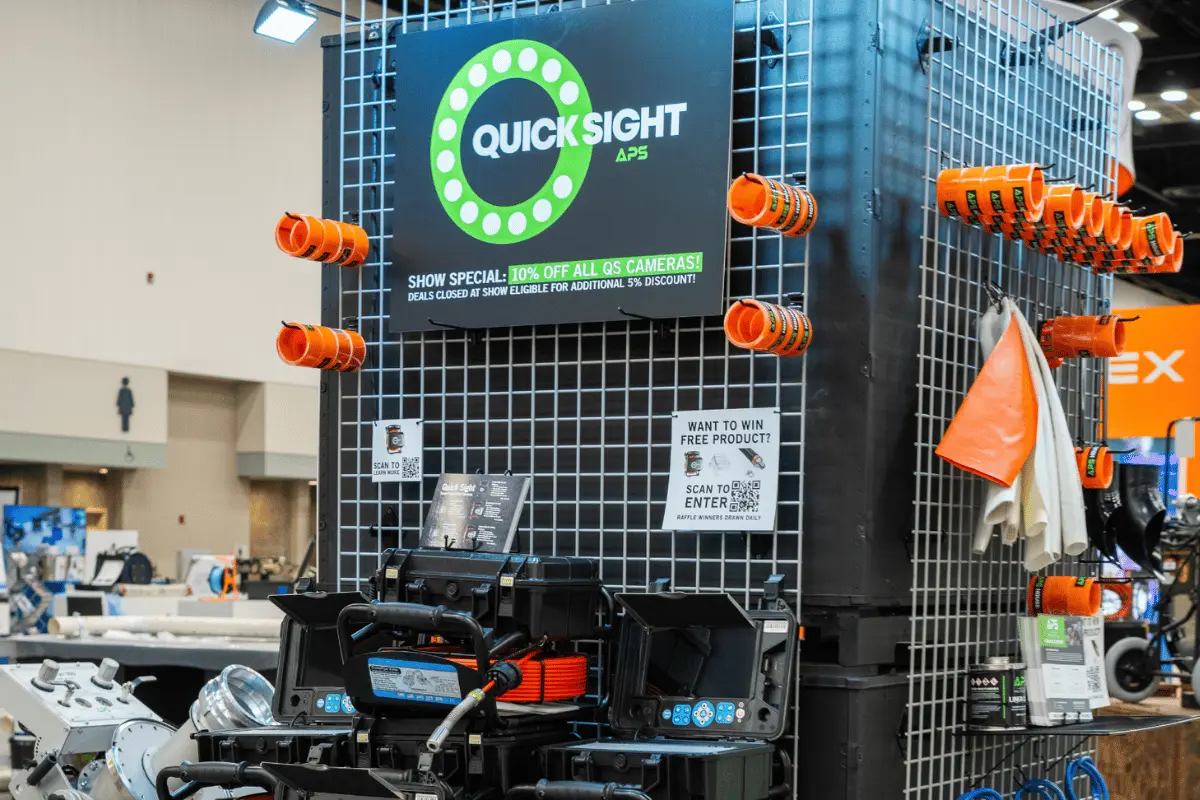
The Quick Sight Camera lineup includes:
- QS20 for 1.5-inch to 3-inch pipes
- QS40 and QS40SL for 2-inch to 4-inch pipes
- QS40R and QS40RSL for 3-inch to 6-inch pipes
- 100-foot (QS20) or 130-foot (All QS40 Models) push rods Built-in 512Hz sonde locating
- A 10-inch HD screen
- SD card recording
- Fixed and self-leveling options
- Compact and lightweight construction
The correct pipe inspection camera helps the technician navigate the line, capture useful footage, and document findings more effectively.
Do Not Stop at the First Problem
Finding one issue does not mean the inspection is complete.
A root mass may be hiding a damaged joint. A heavy scale may be covering a crack. A blockage may prevent the camera from reaching another problem farther down the line.
Whenever possible, the entire accessible section should be inspected.
After cleaning or removing an obstruction, run the inspection camera through the line again. The second inspection may reveal conditions that were impossible to see during the first pass.
A thorough inspection helps contractors avoid incomplete diagnoses and gives customers a more accurate understanding of the pipe’s overall condition.
Keep Your Equipment Ready for the Next Inspection
Inspection cameras are used in demanding environments.
Push rods and camera heads regularly travel through grease, debris, tight turns, and damaged pipelines. Keeping the system clean and checking it before and after each job can help reduce unnecessary downtime.
Quick Sight Cameras feature a modular, field-repairable design. APS also offers Quick Sight Camera parts, nationwide repair services, and in-house support for all Quick Sight Camera models.
Contractors should regularly check:
- The camera lens
- The camera head
- The push rod
- The reel and frame
- The monitor and controls
- Recording functions
- Sonde operation
- Cable connections
Routine care helps keep the sewer inspection camera ready when it is needed.
The APS Approach
At American Pipelining Solutions, we believe a successful trenchless project begins with understanding the condition of the pipe.
Quick Sight inspection cameras provide clear HD visuals, built-in locating, distance measurement, recording capabilities, and jobsite-ready portability to help contractors diagnose problems and document their work.
Whether you are performing a routine drain inspection camera survey, preparing a host pipe for lining, verifying a completed repair, or showing a customer the cause of a recurring problem, reliable footage allows you to make more informed decisions.
APS also supports Quick Sight users with Quick Sight Camera parts, in-house repair services, training, and knowledgeable support.
The better contractors can see the problem, the better they can explain it.
And when customers understand what is happening inside their pipes, they can move forward with greater confidence.