When contractors begin researching cured-in-place pipe (CIPP) rehabilitation, one of the first questions they encounter is which curing method makes the most sense for their business. Ambient cure, hot water cure, and ultraviolet (UV) cure all produce a structural pipe within a pipe, but the way each system reaches that finished result is very different.
There is no single cure method that is objectively “best.” Instead, each offers distinct advantages depending on the size of the project, the installation environment, crew experience, equipment investment, and production goals.
Understanding these differences is important - not only when purchasing equipment, but also when selecting the right process for each installation. Choosing the proper cure method can improve efficiency, reduce unnecessary equipment on the jobsite, minimize installation variables, and ultimately help contractors deliver more consistent results.
At APS, we believe the conversation should never be about forcing every contractor into one technology. Instead, it should focus on helping installers understand the strengths of each curing method so they can make informed decisions based on the work they perform every day.
Why the Cure Method Matters
While all CIPP systems share the same objective - creating a new structural pipe inside an existing host pipe - the curing process determines much more than simply how the resin hardens.
The curing method influences:
- Installation speed
- Equipment requirements
- Jobsite logistics
- Crew size
- Energy consumption
- Resin selection
- Quality control
- Long-term consistency
Every additional component brought to a jobsite introduces another variable that crews must manage. Pumps, boilers, chillers, generators, hoses, and monitoring systems all require setup, maintenance, transportation, and troubleshooting.
Likewise, the curing process itself affects how predictable an installation becomes. The ability to monitor temperatures, verify cure progression, and maintain consistent curing conditions often determines whether an installation goes smoothly or requires costly rework.
For these reasons, experienced contractors often evaluate an entire curing workflow rather than focusing solely on how quickly a liner hardens.
Ambient Cure
Ambient cure is one of the simplest and most accessible curing methods available. Instead of using an external heat source, specially formulated resins cure naturally over time at normal environmental temperatures.
Because no boilers, UV light heads, or specialized heating equipment are required, ambient cure systems generally involve the least amount of equipment and can often represent the lowest initial investment into CIPP rehabilitation.
This simplicity has made ambient cure a common starting point for contractors entering trenchless rehabilitation.
How It Works
Once both of the resin’s components (A and B) are combined, the resin begins curing naturally through a chemical reaction. Depending on the resin system, surrounding temperatures, and project conditions, the curing process may take several hours before the liner reaches full structural strength.
Unlike heat-assisted systems, installers rely primarily on proper resin mixing, environmental conditions, and recommended cure times rather than actively controlling the cure throughout the installation.
Because the process occurs naturally, patience becomes an important part of the installation.
Advantages of Ambient Cure
Lower Equipment Investment
One of ambient cure’s greatest strengths is its simplicity.
Without boilers, UV curing systems, or specialized heating equipment, contractors can begin offering CIPP rehabilitation with a relatively straightforward equipment package.
This often reduces transportation requirements, lowers maintenance costs, and simplifies operator training.
Fewer Mechanical Components
With fewer pieces of equipment involved, there are fewer systems that require routine maintenance or troubleshooting.
Many contractors appreciate the straightforward workflow, especially when performing localized repairs or smaller rehabilitation projects.
Flexible Installation Environments
Since ambient cure does not require circulating hot water or operating a UV light source, it can be well suited for installations where bringing additional equipment to the jobsite would be difficult.
Tight residential access, remote locations, or confined work areas may benefit from the reduced equipment footprint.
Considerations with Ambient Cure
While simplicity offers advantages, ambient curing also introduces several variables that installers must manage carefully.
Cure Time
The most obvious consideration is time.
Because the resin cures naturally, installations generally require significantly longer cure windows before returning the pipe to service.
Longer cure times may reduce the number of projects crews can complete during a typical workday.
Environmental Conditions
Ambient temperatures directly influence curing performance.
Cold weather may extend cure times considerably, while warmer temperatures may accelerate resin activity.
Maintaining proper storage conditions, resin handling procedures, and installation timing becomes increasingly important as temperatures fluctuate throughout the year.
Production Scheduling
Longer curing periods can affect overall project scheduling.
When contractors complete multiple installations each day, additional curing time may reduce scheduling flexibility and equipment availability.
Hot Water Cure
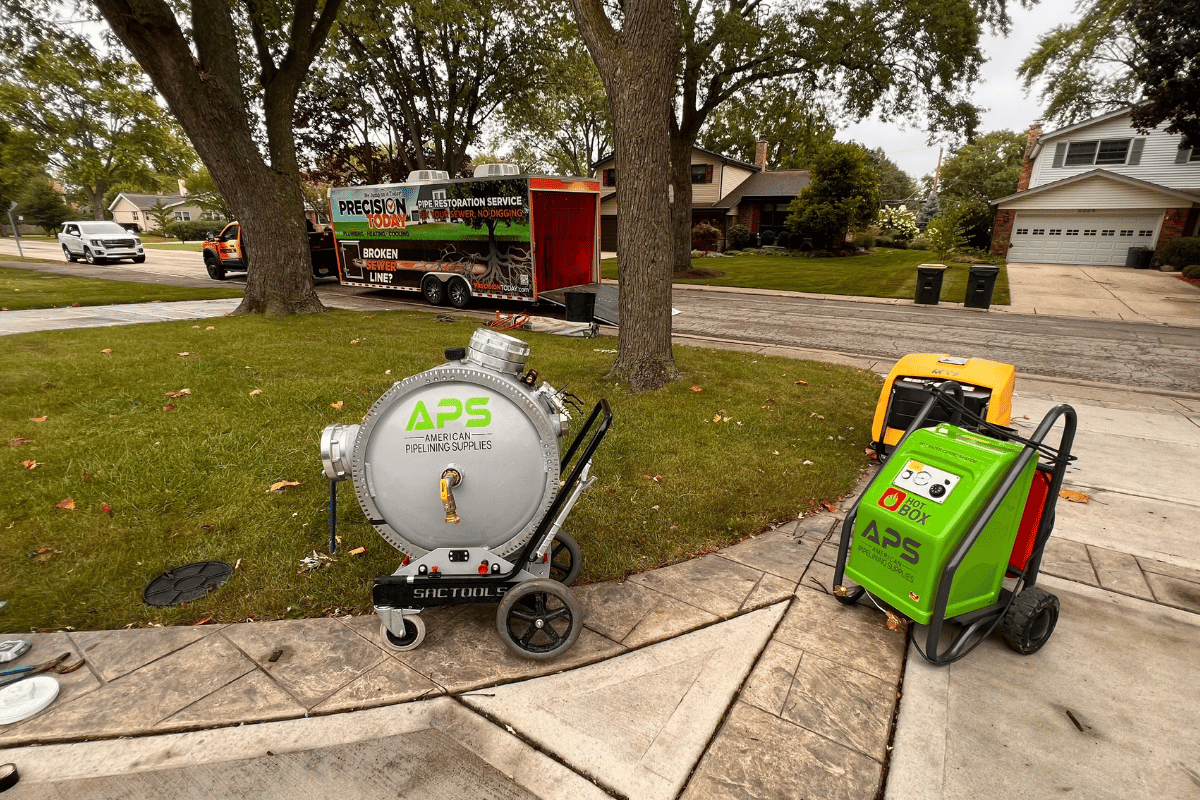
Hot water curing has been one of the most widely used methods in CIPP rehabilitation for decades and remains a proven solution for many municipal, commercial, and residential rehabilitation projects.
Instead of allowing the resin to cure ambiently, heated water is circulated through the installed liner. The elevated temperature accelerates the curing reaction, allowing the liner to reach structural strength much faster than ambient cure alone.
Because contractors actively control the water temperature throughout the process, hot water curing offers greater consistency than relying solely on surrounding environmental conditions.
For many years, this balance between reliability and production speed made hot water curing the industry standard.
How Hot Water Cure Works
After the liner has been inverted or pulled into place, heated water is circulated throughout the liner using specialized equipment.
The water transfers heat evenly across the liner, accelerating the resin and allowing it to cure under carefully monitored temperature conditions.
Throughout the curing process, installers monitor temperatures to help ensure the resin reaches the manufacturer’s recommended cure profile.
Once curing is complete, the system must be cooled before the liner can be returned to service.
Unlike ambient cure, where installers primarily wait for the resin to harden naturally, hot water cure involves actively managing both the heating and cooling cycles to achieve a successful installation.
Advantages of Hot Water Cure
Faster Than Ambient Cure
Applying heat significantly reduces cure time compared to ambient curing.
This allows contractors to complete projects more quickly while reducing the amount of time a pipe remains out of service.
Proven Technology
Hot water curing has decades of successful field experience across a wide range of applications.
Its long history has resulted in well-established installation procedures, training resources, and industry familiarity.
Many experienced contractors continue to rely on hot water systems because they understand the process and have built efficient workflows around the technology.
Consistent Heat Distribution
Circulating heated water helps maintain relatively even temperatures throughout the liner, promoting a predictable cure when the system is operated correctly.
Because the curing environment is actively managed, installers have greater control than with ambient cure alone.
Considerations with Hot Water Cure
The increased control provided by hot water curing also comes with additional equipment and logistical requirements.
Typical systems may require:
- Boilers
- Water tanks
- Recirculation Pumps
- Circulation hoses
- Power sources
- Temperature monitoring equipment
Transporting, setting up, operating, and maintaining this equipment can increase both preparation time and overall jobsite complexity.
Additionally, once curing has finished, the heated water must typically be cooled and managed before the installation is complete, adding another step to the overall workflow.
For contractors focused on maximizing daily production while minimizing equipment requirements, these additional considerations often become part of the evaluation when comparing newer curing technologies.
UV Cure Technology
Over the past several years, UV curing has become one of the fastest-growing technologies in trenchless rehabilitation. Rather than relying on time or heated water to activate the resin, UV systems use high-intensity ultraviolet light to initiate and control the curing process.
For many contractors, the appeal of UV curing isn’t simply speed - it’s the combination of predictability, process control, and streamlined jobsite workflows.
As equipment has continued to evolve, modern UV systems have become more compact, easier to operate, and more accessible to contractors performing residential, commercial, and municipal rehabilitation projects.
How UV Cure Works
After the liner has been installed inside the host pipe, a UV light head is positioned at the end of the installation. The light head is then pulled through the liner at a carefully controlled speed while emitting ultraviolet light that activates the UV-sensitive resin.
Unlike ambient or hot water curing, the resin remains workable until it is exposed to UV light. This gives installers greater control over the installation process before curing begins.
Because the curing cycle is controlled by the movement of the light head, contractors can monitor the curing process in real time and maintain a consistent cure profile throughout the installation.
The result is a highly controlled curing process with fewer external variables than traditional methods.
Advantages of UV Cure
Greater Process Control
UV curing allows installers to actively manage the curing process from beginning to end.
Instead of estimating cure times based on ambient temperatures or monitoring water temperatures throughout an installation, crews can verify curing progress as the light head advances through the liner.
This controlled process helps improve installation consistency while reducing variables that may affect cure quality.
Cleaner Overall Workflow
UV curing generally involves fewer process steps than hot water curing.
Without heating large volumes of water or managing cooling cycles afterward, crews can often move through installations with a more streamlined workflow.
This can improve efficiency while reducing the amount of equipment that must be transported, monitored, and maintained throughout the project.
Considerations with UV Cure
Like any rehabilitation technology, UV curing is not the right solution for every contractor or every application.
The initial equipment investment is typically greater than ambient cure systems, and crews must become familiar with UV-specific materials, curing procedures, and operating techniques.
Additionally, UV systems require liners and resin systems specifically designed for ultraviolet curing.
For contractors planning long-term growth, however, many view these considerations as investments in production efficiency, repeatability, and workflow improvements.
Which Cure Method Is Right for You?
Rather than asking which technology is superior, contractors should ask which technology best supports their business.
Ambient Cure May Be a Good Fit If:
- You’re entering the CIPP market.
- Your projects are smaller or less time-sensitive.
- You prefer a simpler equipment package.
- Lower startup costs are a priority.
Hot Water Cure May Be a Good Fit If:
- You already have experience with traditional CIPP installations.
- Your projects benefit from active temperature control.
- Your crews are comfortable managing larger equipment packages.
- You routinely perform larger rehabilitation projects where established workflows are already in place.
UV Cure May Be a Good Fit If:
- Production efficiency is a priority.
- You want to reduce jobsite equipment.
- Your business performs frequent rehabilitation projects.
- You’re looking for greater process control and installation consistency.
- You want technology that can help streamline long-term operations.
Ultimately, every contractor’s workflow is different. The most effective investment is the one that supports your customers, your crews, and the types of projects you perform most often.
The APS Approach
At American Pipelining Solutions, we don’t believe every contractor should be pushed toward a single curing technology.
Every business is different. Some companies are just beginning to offer trenchless rehabilitation services. Others are expanding into larger municipal projects or looking to improve production efficiency with newer equipment.
That’s why APS offers solutions across multiple curing methods instead of promoting a one-size-fits-all approach.
Whether you’re evaluating ambient cure systems, traditional hot water processes, or modern UV technology, our goal is the same: helping contractors build a rehabilitation program that fits their business today while preparing for future growth.
That philosophy extends beyond equipment.
From hands-on training through APSTA and ongoing technical support to material selection, repair services, and long-term customer relationships, APS is committed to helping contractors install with confidence - not just purchase equipment.
The right curing method isn’t determined by what’s newest or most popular.
It’s determined by what helps your team work more efficiently, deliver consistent results, and continue growing your trenchless business.