
When a customer hears the words “trenchless pipe repair,” they often assume there’s only one solution. In reality, there are several ways to rehabilitate a damaged pipe, and choosing the right one can make all the difference in cost, installation time, and long-term performance.
Two of the most common trenchless repair methods are sectional pipe patching (point repair) and full-length CIPP lining. Both methods eliminate the need for major excavation and can restore aging pipelines without tearing up floors, landscaping, or concrete. The key is understanding when each solution makes the most sense.
The good news? Neither method is inherently “better” than the other. They simply solve different problems. The challenge is identifying the condition of the pipe and matching the repair to the customer’s needs.
Why Choosing the Right Repair Matters
One of the biggest misconceptions in the industry is that every damaged pipe needs the same solution.
The truth is, every pipeline has its own solution. A pipe with a single crack near a fitting doesn’t necessarily need a full-length liner. Likewise, a line with multiple leak points, root intrusions, and heavy corrosion may not benefit from repairing one section at a time.
Choosing the right rehabilitation method can impact:
- The overall cost of the repair
- The amount of downtime for the customer
- Long-term performance and reliability
- Future maintenance requirements
- Customer satisfaction and trust
Recommending the appropriate solution isn’t just good for the customer - it’s good for business. Customers appreciate contractors who provide options and explain why one repair may be more beneficial than another.
The most successful contractors don’t try to fit every job into the same repair method. Instead, they evaluate the condition of the pipe and recommend the solution that delivers the greatest long-term value.
The Camera Inspection Tells the Story
Before any repair recommendation is made, it all starts with a thorough camera inspection.
A high-quality inspection allows contractors to evaluate:
- The number of defects present
- The severity of the damage
- Pipe material and condition
- The location of problem areas
- Whether defects are isolated or widespread
A camera inspection often answers the most important question:
Is this pipe experiencing one problem, or is the entire system beginning to fail?
If the damage is localized, a point repair may be the perfect solution. If defects exist throughout the line, a full-length liner may provide greater long-term value.
This is why many successful trenchless contractors invest in both their inspection capabilities and their rehabilitation equipment. The better the diagnosis, the better the repair recommendation.
What Is Pipe Patching?
Pipe patching, often called point repair, is exactly what it sounds like: repairing a specific section of damaged pipe rather than rehabilitating the entire line.
A resin-saturated patch is positioned over the damaged area and cured in place, creating a structural repair within that section of pipe. Point repairs are commonly used to address:
- Cracks and fractures
- Offset joints
- Root intrusion
- Small sections of corrosion
- Localized defects or leaks
Most point repairs can be completed quickly, with minimal setup and little disruption to the customer. In many cases, a contractor can complete multiple repairs in a single day.
Because only the damaged section is repaired, point repairs are often a cost-effective solution for customers who don’t need a complete rehabilitation of their pipeline.
Where Versa-Patch Fits Into the Equation
Not all pipe patching systems are created equal.
At APS, we developed Versa-Patch to help contractors tackle localized pipe defects with a solution that is simple to deploy, versatile in the field, and built for long-term performance.
Designed for pipes ranging from 2” to 6”, Versa-Patch can repair much more than just straight sections of pipe. The system is capable of navigating:
- Bends and offsets
- Diameter transitions
- P-traps and difficult geometries
One of the biggest advantages of Versa-Patch is its simplicity. Contractors don’t need a trailer full of equipment or a massive investment to get started. The system’s compact footprint, reusable packers, and straightforward installation process make it an excellent solution for contractors looking to expand their trenchless offerings.
In fact, many contractors find that point repair systems like Versa-Patch become some of the most profitable tools in their business because they allow crews to complete targeted repairs quickly and efficiently.
Why Contractors Choose Versa-Patch
- Repairs pipes from 2”–6”
- Handles bends, offsets, and transitions
- Reusable packers designed for repeated use
- Structural repairs with long-term performance
- Minimal equipment requirements
- Fast setup and return to service times
Whether you’re making your first trenchless repair or adding another solution to your toolbox, Versa-Patch provides a practical way to solve localized pipe defects without rehabilitating an entire pipeline.
What Is Full-Length CIPP Lining?
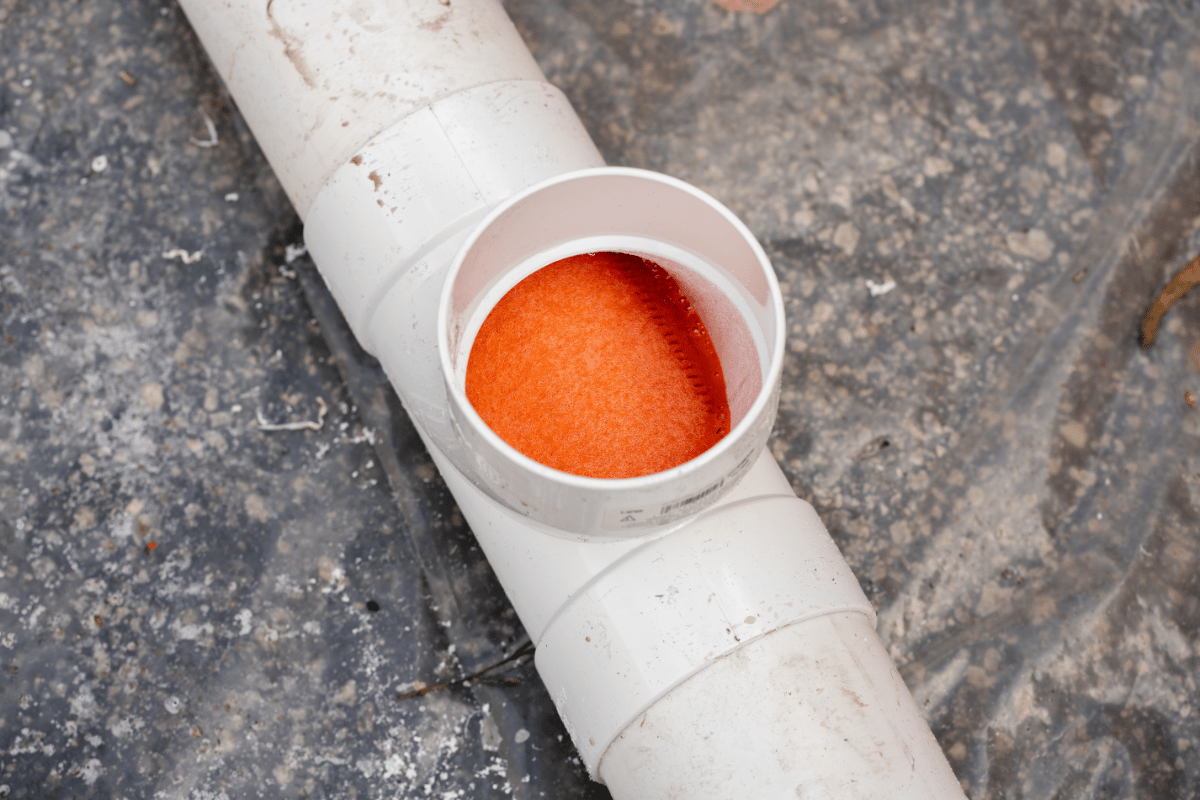
Full-length Cured-In-Place Pipe (CIPP) lining rehabilitates an entire pipeline by installing a continuous liner from one access point to another.
After the liner is inserted and cured, it creates a new, jointless pipe inside the existing host pipe. The result is essentially a new pipe inside the old one.
Full-length lining is commonly used when:
- A pipe has multiple defects throughout the line
- Corrosion is widespread
- There are recurring root intrusion issues
- The pipe has reached the end of its service life
- The customer wants a complete system restoration
Because the entire pipe is renewed, full-length lining is often considered the best long-term solution when damage extends beyond a single location.
For many property owners, full-length lining provides peace of mind knowing that the entire pipeline has been rehabilitated rather than simply repairing one area at a time.
Pipe Patching: The Advantages
Lower Initial Cost
When only a small section of pipe is damaged, patching can be significantly more cost-effective than lining an entire system.
Faster Installations
Point repairs often require less preparation and can typically be completed quickly, minimizing downtime for the customer.
Ideal for Isolated Defects
Not every damaged pipe needs a full rehabilitation. If the issue is limited to one area, a targeted repair may be the smartest solution.
Great Entry Point for Contractors
For contractors entering the trenchless market, point repair systems like Versa-Patch offer an excellent opportunity to expand service offerings without the investment required for full-length lining systems.
Less Material, Less Waste
Because only the damaged section is being repaired, pipe patching can be an efficient use of materials while still delivering a structural repair.
Full-Length Lining: The Advantages
More Rehabilitation in Less Time
Rather than addressing a single, localized issue, full-length lining renews a large section of the sewer system in one installation. Entire systems can be repaired quickly and effectively.
Long-Term Protection
A continuous liner eliminates joints and seals off multiple defects simultaneously, helping prevent future failures.
Fewer Return Visits
If numerous defects already exist throughout the line, repairing one section at a time can become costly over time. Full-length lining often prevents repeat repairs and provides greater peace of mind for the customer.
Increased Value for Aging Infrastructure
Municipalities, commercial facilities, and homeowners often choose full-length lining when they want to maximize the remaining life of an entire piping system.
Excellent for Preventative Rehabilitation
In some cases, customers choose to rehabilitate a line before it experiences a catastrophic failure, avoiding emergency repairs and unexpected downtime.
Real-World Examples
Sometimes the easiest way to understand the difference between pipe patching and full-length lining is to look at real-world scenarios.
Scenario #1: The Isolated Crack
A homeowner experiences a small leak under their driveway. A camera inspection reveals a single crack while the remainder of the pipe is in excellent condition.
Best Solution: Pipe Patching with Versa-Patch.
Repairing one section of pipe is often more cost-effective than rehabilitating the entire line.
Scenario #2: Multiple Root Intrusions
A sewer line has several root intrusions, multiple cracks, and signs of deterioration throughout the system.
Best Solution: Full-Length CIPP Lining.
Repairing individual defects would likely lead to future service calls and additional costs.
Scenario #3: A Commercial Facility With Limited Downtime
A restaurant has a localized defect causing infiltration, but the rest of the line is structurally sound. The owner needs a repair completed quickly with minimal disruption to operations.
Best Solution: Pipe Patching.
Targeted repairs can often return the line to service faster while avoiding unnecessary rehabilitation of the entire system.
Scenario #4: An Aging Clay Sewer Service
A homeowner has recurring backups and multiple defects scattered throughout an older clay line.
Best Solution: Full-Length Lining.
A complete rehabilitation provides a longer-term solution and addresses multiple issues in a single installation.
So…Which Repair Is Best?
The answer is simple:
It depends on the condition of the pipe.
Choose pipe patching when:
- Damage is isolated to one or two areas
- The remainder of the pipe is in good condition
- Budget is a major consideration
- A fast, targeted repair is needed
- A solution like Versa-Patch can address the issue without rehabilitating the entire pipeline
Choose full-length lining when:
- Multiple defects exist throughout the pipe
- Corrosion or deterioration is widespread
- The customer wants a complete rehabilitation
- Long-term system renewal is the primary goal
Neither solution is inherently “better” than the other—they simply solve different problems.
The Best Contractors Know Both
The most successful trenchless contractors don’t limit themselves to one repair method. They understand when a point repair is the right answer and when a full-length liner provides greater value.
Having both solutions available allows you to:
- Offer more options to your customers
- Solve a wider variety of pipe defects
- Increase profitability
- Build trust by recommending the repair that truly fits the situation
- Position yourself as a complete rehabilitation provider
At APS, we believe the right equipment is only part of the equation. Proper training, support, and understanding when to use each technology are what ultimately set contractors apart.
That’s why we continue to provide hands-on training and support for both point repair and full-length lining applications - because the more solutions you can confidently offer, the better equipped you’ll be to solve your customers’ problems.
The APS Approach
At APS, we believe the best contractors aren’t limited to a single repair method—they have the knowledge, equipment, and confidence to recommend the right solution for every job.
That’s why we offer solutions for both point repair and full-length rehabilitation, backed by hands-on training and ongoing support through APSTA.
Whether it’s a targeted repair using Versa-Patch or a complete rehabilitation with CIPP lining, our goal is to help contractors solve problems efficiently, minimize disruption for their customers, and grow their trenchless businesses with confidence.
Understanding when to repair a section of pipe and when to rehabilitate an entire system can lead to better outcomes, fewer callbacks, and greater long-term value for both the contractor and the customer.
At the end of the day, every damaged pipe tells a different story.
Some need a simple, localized repair. Others need complete rehabilitation.
The key is having the right tools - and the right support - to make the best recommendation possible.
Because sometimes the best repair isn’t the biggest repair - it’s simply the right one.