
If you have been around the trenchless industry long enough, you know that one of the most common questions contractors ask when entering the world of trenchless pipe lining is simple: should you invert the liner or pull it into place?
At first glance, the difference may seem minor. But the answer affects everything from pipe diameter and run length to access point availability, host pipe condition, and the liner system being used.
Both inversion lining and pull-in-place installation are proven techniques used in trenchless sewer lining and rehabilitation. In practice, though, most crews reach for inversion. As long as a usable access point exists, inversion is the more versatile and dependable method for the majority of residential and commercial jobs. Pull-in-place still has a place, but it fits a narrower set of conditions. Understanding how each method works, and where pull-in-place genuinely makes sense, is the key to choosing confidently.
What Is Trenchless Pipelining? Understanding Trenchless Sewer Lining
Before comparing installation methods, it helps to answer a foundational question: what is trenchless pipelining?
Trenchless pipelining, often referred to as trenchless pipe lining or trenchless sewer lining, is the process of rehabilitating a damaged pipe from the inside without excavating the surrounding ground. Instead of digging up the existing pipe, technicians access the system through existing cleanouts, manholes, or minimal entry points and restore the line using a structural liner.
The most widely used form of trenchless pipe rehabilitation is CIPP (Cured-In-Place Pipe) lining. In this process, a felt or fiberglass liner is saturated with resin and installed inside the host pipe. The liner is then pressed against the interior pipe walls and cured to form a smooth, seamless pipe within the original pipe.
When properly installed, a CIPP liner can provide a design life of approximately 50 years while restoring full structural integrity to the pipeline.
Protecting and Handling the Liner Before Installation
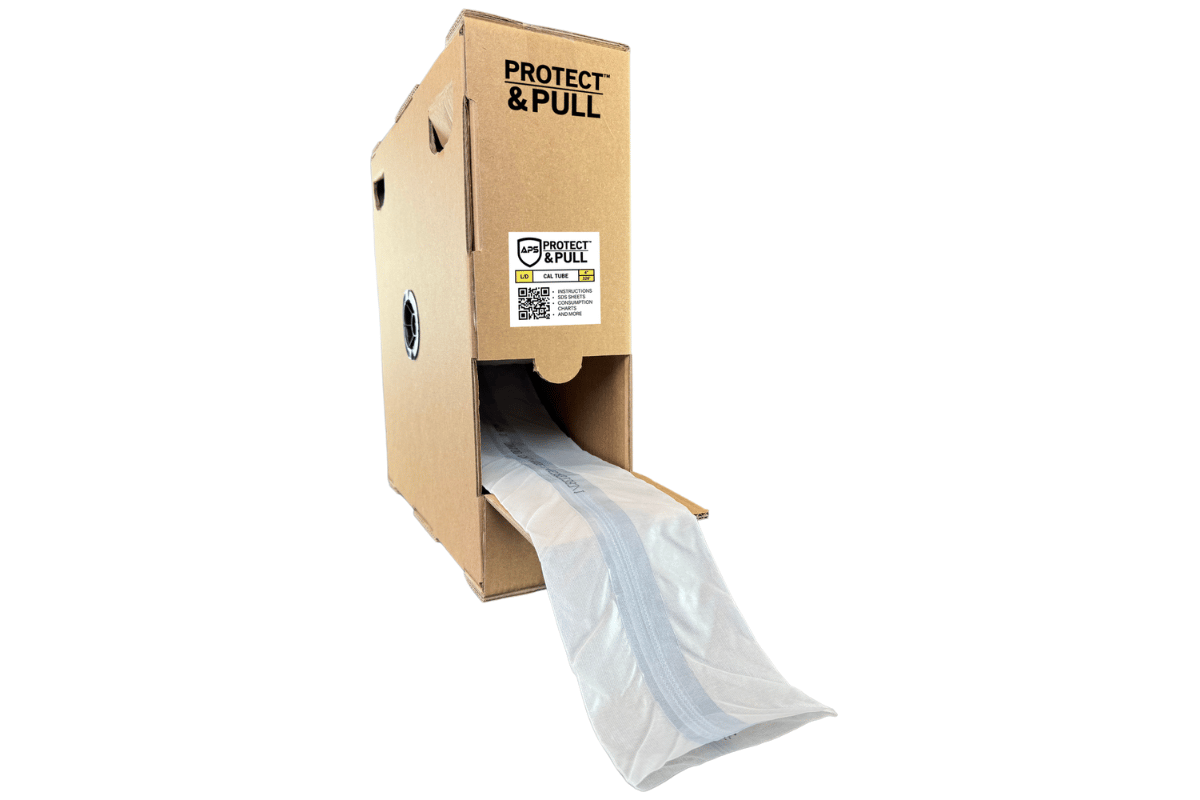
No matter which installation method you use, results start with how the liner is handled before it ever enters the pipe. Resin-saturated liners must stay protected, organized, and free of contamination from wet-out through deployment. Many contractors rely on liner handling and staging systems to keep materials clean and ready for controlled installation. Equipment designed for this purpose, such as the Protect & Pull system, helps crews store, transport, and stage liners efficiently, regardless of whether the liner is ultimately inverted, pushed, or pulled into place.
Two of the most common installation approaches used in trenchless lining are inversion lining and pull-in-place installation. Both produce a cured structural liner. The primary difference is how the liner is installed inside the host pipe.
How Inversion Lining Works
The inversion method is one of the most widely used approaches in residential and commercial trenchless sewer lining. Once you see it performed in the field, the logic behind the method becomes clear.
In an inversion installation, a resin-saturated liner is loaded into an inversion drum positioned at a single access point. Air pressure is then applied, causing the liner to turn inside out as it travels through the pipe. Many technicians compare the process to turning a wet sock inside out as it moves forward.
As the liner inverts, the resin-coated surface is pressed tightly against the interior walls of the host pipe. When the liner reaches the end of the run, the line is pressurized until the resin’s curing process is complete.
Curing may be achieved using hot water, steam, or UV light depending on the liner system and job requirements. Once curing is complete, any lateral connections covered by the liner are reopened using a high speed miller or robotic cutting system.
The result is a smooth, jointless structural pipe formed inside the existing pipe.
One of the main operational advantages of inversion lining is that it typically requires only a single access point. Because pressure drives the liner through the system, there is no need to thread ropes or cables through the pipeline beforehand.
Where Inversion Lining Excels
Inversion lining is often the preferred option for many residential and building drain applications where access points are limited.
Common scenarios include:
-
Residential lateral lines where only one cleanout is available
\ -
Under-slab repairs where cutting concrete for a second access point would be costly
\ -
Cast iron, clay, PVC, or concrete pipes experiencing cracks, corrosion, or root intrusion
\ -
Pipes with bends or transitions where pressure-driven inversion helps the liner conform to the pipe geometry
\
Because inversion pressure seats the liner firmly against the host pipe walls, the method also provides excellent liner-to-wall contact, which is especially useful in pipes with minor deformation.
How Pull-In-Place Works
Pull-in-place installation takes a different approach to trenchless pipe lining.
Instead of inverting the liner using air or water pressure, the resin-saturated liner is physically pulled through the host pipe using ropes or cables. Two access points are required: one where the liner is inserted and another where the liner is pulled from.
Once the liner reaches its final position, an inflation bladder is inserted and expanded to press the liner firmly against the pipe walls. The liner is then cured, typically ambiently or with UV light, and the bladder is removed once curing is complete.
Because it relies on less equipment than an inversion setup, pull-in-place can carry a lower equipment cost. That lower barrier to entry is its main advantage, but it comes with a trade-off: the method works best on short, straightforward runs.
Where Pull-In-Place Excels
Pull-in-place installations make the most sense when the run is kept short and simple. The longer and more complex the run, the harder a liner becomes to pull cleanly into position, so the best candidates are jobs where the setup is already straightforward.
Typical applications include:
- Jobs where two access points already exist and setup is straightforward
- Short, direct runs where the liner can be pulled into place without added length or complexity
- Situations where camera verification of liner placement prior to curing is desirable
\
Because the liner can be visually confirmed during placement, pull-in-place can provide an additional layer of installation verification in certain environments.
Comparing the Two Methods
When contractors evaluate inversion lining vs pull-in-place, two factors do most of the deciding: access points and equipment cost.
Access Points
Inversion lining requires one access point, while pull-in-place requires two. This is the single biggest practical difference. As long as you have one usable access point, inversion is almost always the preferred method. Pull-in-place only becomes viable when a second access point already exists. And if creating that second access point would mean cutting concrete or opening walls, inversion is the clear choice.
Equipment Cost
Inversion typically requires larger, more expensive equipment, while a pull-in-place setup can be less costly to get into. That lower equipment cost is the strongest argument for pull-in-place. The catch is that pull-in-place is limited to shorter, simpler runs, so the savings only apply within a narrow range of jobs.
Why Inversion Usually Wins
For the vast majority of residential and commercial work, inversion is the more practical and versatile choice. It needs only one access point, handles a wider range of run lengths and pipe conditions, and seats the liner firmly through consistent pressure. Pull-in-place earns its keep on short, simple runs where two access points already exist and equipment budget is the priority, but in most real-world conditions, crews will lean toward inverting.
Training Makes the Difference
Understanding the theory behind trenchless pipe lining methods is a good starting point, but trenchless sewer rehabilitation is a hands-on discipline.
Variables such as resin wet-out mixing ratios, inversion pressures, curing temperatures, and liner calibration require real-world experience to master. Small mistakes in any part of the process can lead to liner failures, callbacks, and unnecessary project costs.
That is why structured training is so valuable.
The American Pipelining Solutions Training Academy (APSTA) focuses on real-world trenchless installation scenarios rather than classroom theory alone. Contractors gain hands-on experience with liner systems, installation equipment, and troubleshooting techniques they will encounter in the field.
For companies expanding into trenchless lining, proper training is often the fastest path to performing installations confidently and profitably.
Frequently Asked Questions
Q: What is the main difference between inversion lining and pull-in-place?
A: The main difference lies in how the liner is installed. Inversion lining uses air pressure to turn the liner inside-out as it travels through the pipe from a single access point. Pull-in-place requires two access points and uses ropes or cables to pull the liner into position before inflating a bladder to press it against the pipe walls. Both methods result in a structurally cured CIPP liner.
Q: Can inversion lining be done with only one cleanout?
A: Yes. One of the biggest advantages of inversion lining is that it typically requires only a single access point. This makes the method ideal for jobs where creating a second access point would require cutting concrete or opening walls.
Q: How long of a run can be lined using inversion?
A: Inversion lining is mainly limited to the capacity of your inversion equipment and complexity of the pipe. Shots of 200-300 feet are achieveable, with the correct preparation and material/equipment selection.
Q: Is trenchless pipe lining the same as trenchless sewer lining?
A: In most cases, yes. The terms trenchless pipe lining and trenchless sewer lining are often used interchangeably. Both refer to rehabilitation methods such as CIPP lining that restore damaged pipelines from the inside without excavation.
Q: Do I need training to perform trenchless pipe lining?
A: Yes. Both inversion lining and pull-in-place installations involve specialized equipment, resin handling, and curing procedures. Proper training helps technicians avoid installation mistakes and ensures liners perform as intended. The APS Training Academy offers hands-on instruction designed to help contractors build confidence with trenchless installation methods and equipment.